
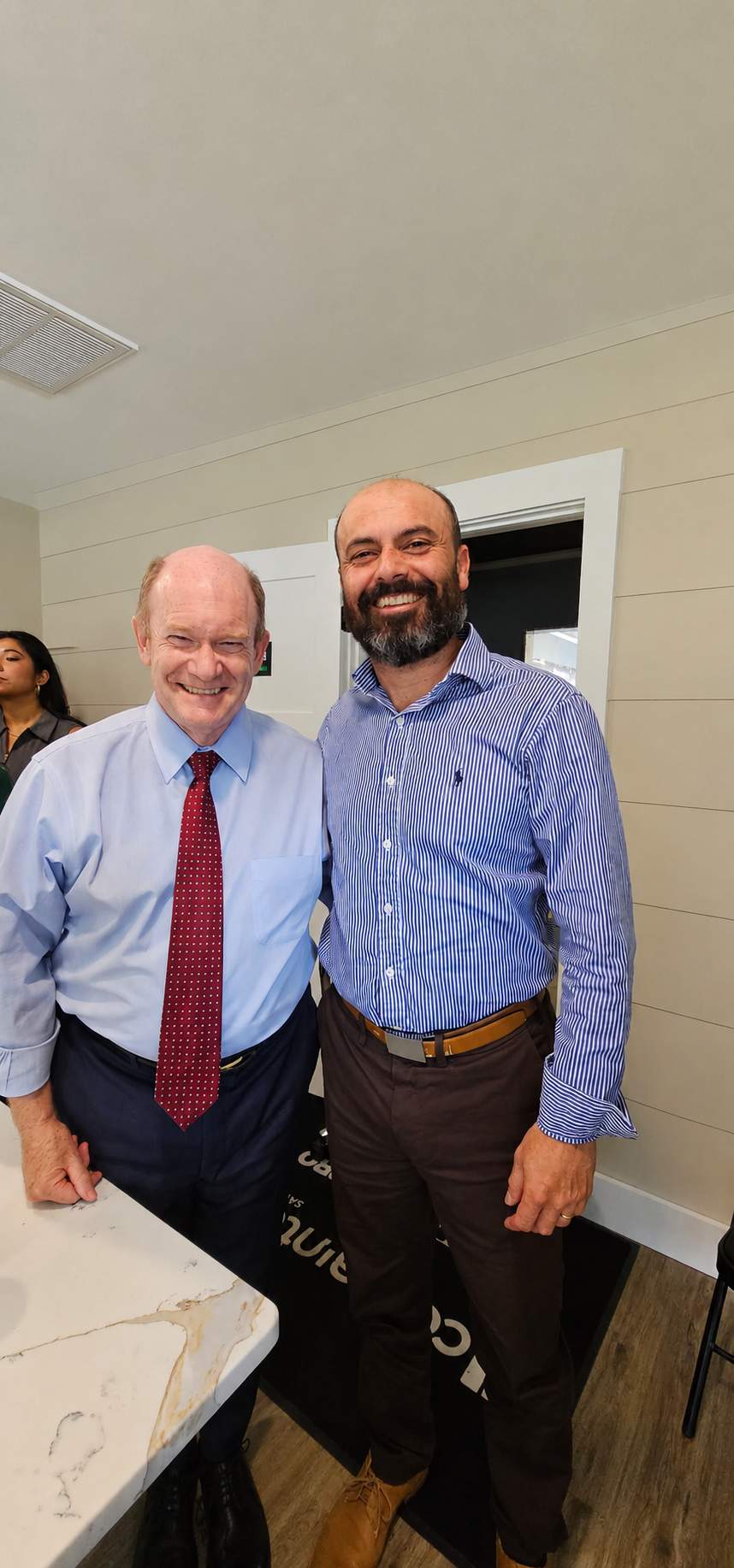
BRO Builder Founder and CEO Frans I. Rehl recently met with Senator Chris Coons to discuss construction modernization, contractor accessibility, workforce participation, compliance workflows, and operational efficiency within the construction industry.
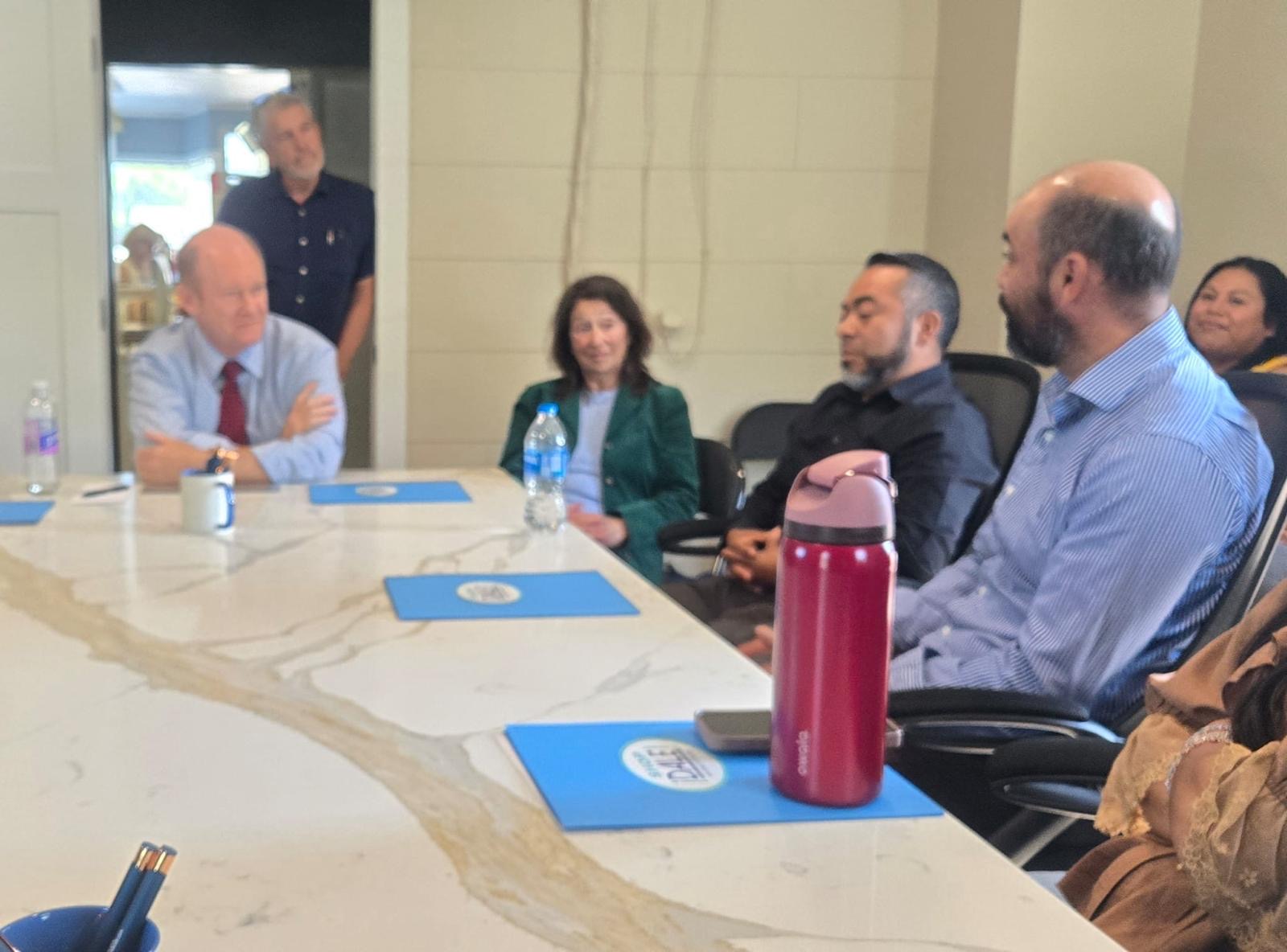
The discussion centered around a growing national challenge: despite significant investments in infrastructure, workforce development, housing, permitting systems, and regulatory oversight, contractors across the country continue to face fragmented workflows, administrative burdens, and execution-level inefficiencies that impact project delivery.
The meeting provided an opportunity to share insights gathered through Contractor Hub, a BRO Builder initiative developed to identify and address recurring operational challenges experienced by contractors across multiple states.
The Challenges Are Not Unique to Delaware
While the meeting focused on opportunities within Delaware, one theme quickly became apparent: many of the obstacles contractors face today are national in scope.
Whether a project is located in Delaware, Florida, Texas, Pennsylvania, New Jersey, California, or any other state, construction professionals frequently encounter similar operational barriers.
- Fragmented procurement systems
- Complex permitting and approval processes
- Disconnected compliance workflows
- Duplicated administrative requirements
- Limited visibility into project opportunities
- Manual coordination between independent systems
- Project delays caused by operational inefficiencies
These challenges affect contractors of all sizes, but smaller firms often feel the impact most significantly because they typically operate with limited administrative resources.
Administrative Improvements vs. Execution Improvements
During the discussion, Senator Coons shared insights from previous efforts focused on improving plan review processes and reducing approval wait times.
His example highlighted an issue that contractors encounter regularly.
Before construction work can begin, professionals often navigate plan reviews, permitting requirements, inspections, code compliance documentation, approvals, and multiple administrative processes.
These requirements serve important purposes. They help ensure safety, accountability, quality standards, and energy efficiency.
However, as standards continue to evolve, the amount of documentation and administrative work required to satisfy those standards often grows as well.
The challenge is not the existence of standards.
The challenge is ensuring that modern tools evolve alongside those standards.
Modernization should not only create new requirements. It should also create better tools that help professionals meet those requirements more efficiently.
This distinction became a key topic of discussion during the meeting. Improving communication between agencies is important, but improving execution for contractors is equally important.
Contractor Hub: Evidence of a Real Industry Problem
Contractor Hub was not developed as a theoretical technology platform.
It emerged from observing recurring operational challenges experienced by contractors, estimators, project managers, homeowners, and construction professionals working on real projects throughout different states.
Over time, a consistent pattern emerged.
Contractors were spending significant amounts of time navigating fragmented systems, searching for information, organizing documentation, and coordinating administrative processes instead of focusing on project execution.
In many cases, the problem was not a lack of information.
The problem was that information was distributed across disconnected systems, forcing contractors to act as the manual connection point between multiple workflows.
Contractor Hub was developed to help address these operational gaps.
REScheck Reporting as a Practical Example
During the meeting, one example discussed was the REScheck Report Generator available through Contractor Hub.
Energy efficiency standards continue to play an important role in modern construction, but compliance documentation can create additional administrative burdens for both contractors and homeowners.
Rather than questioning the standards themselves, Contractor Hub focuses on improving the process of meeting those standards.
Through the platform, users can generate REScheck reports in minutes, dramatically reducing the time required to prepare compliance documentation.
This example demonstrates a broader principle:
As requirements become more sophisticated, the tools available to professionals should become more efficient as well.
By reducing administrative friction, contractors gain more time to focus on planning, coordination, client communication, and project delivery.
Improving Access to Public Bid Opportunities
Another topic discussed involved public procurement and bid accessibility.
Although public bid opportunities are available, information is often spread across numerous municipal websites, procurement platforms, agency portals, and reporting systems.
This fragmentation can make it difficult for contractors to efficiently identify, evaluate, and pursue opportunities.
Contractor Hub has explored methods for aggregating and normalizing publicly available bid information to improve visibility and accessibility.
The objective is straightforward:
Help contractors spend less time searching for opportunities and more time pursuing them.
Supporting Small Contractor Participation
A recurring theme throughout the development of Contractor Hub has been supporting small and mid-sized contractors.
Many highly capable firms possess the skills, workforce, and expertise required to perform quality work, yet still face operational barriers that larger organizations can more easily absorb.
Documentation requirements, compliance coordination, procurement research, and administrative workflows all require time and resources.
Reducing operational friction creates opportunities for broader participation, increased competition, and stronger contractor growth.
A National Opportunity for Construction Modernization
The challenges discussed during the meeting extend far beyond any single state.
Across the country, the construction industry faces increasing pressure to deliver housing, infrastructure improvements, energy-efficient buildings, and workforce development initiatives at scale.
Achieving these goals requires more than administrative modernization.
It also requires execution-level modernization.
Construction professionals should spend more time building and less time navigating unnecessary complexity.
Looking Forward
The meeting reinforced a principle that continues to guide the development of Contractor Hub:
Construction modernization must be informed by the people performing the work.
As BRO Builder continues to expand Contractor Hub and develop new solutions, the focus remains unchanged:
- Identify real operational challenges
- Develop practical contractor-focused solutions
- Reduce administrative friction
- Improve accessibility and transparency
- Support contractor participation and growth
- Strengthen project execution
The future of construction modernization will not be defined solely by policy, regulations, or technology.
It will be defined by how effectively the industry helps contractors build.


 Share Your Experience